
Why Artemis?
What explains the rekindled effort to take humans beyond Earth's orbit

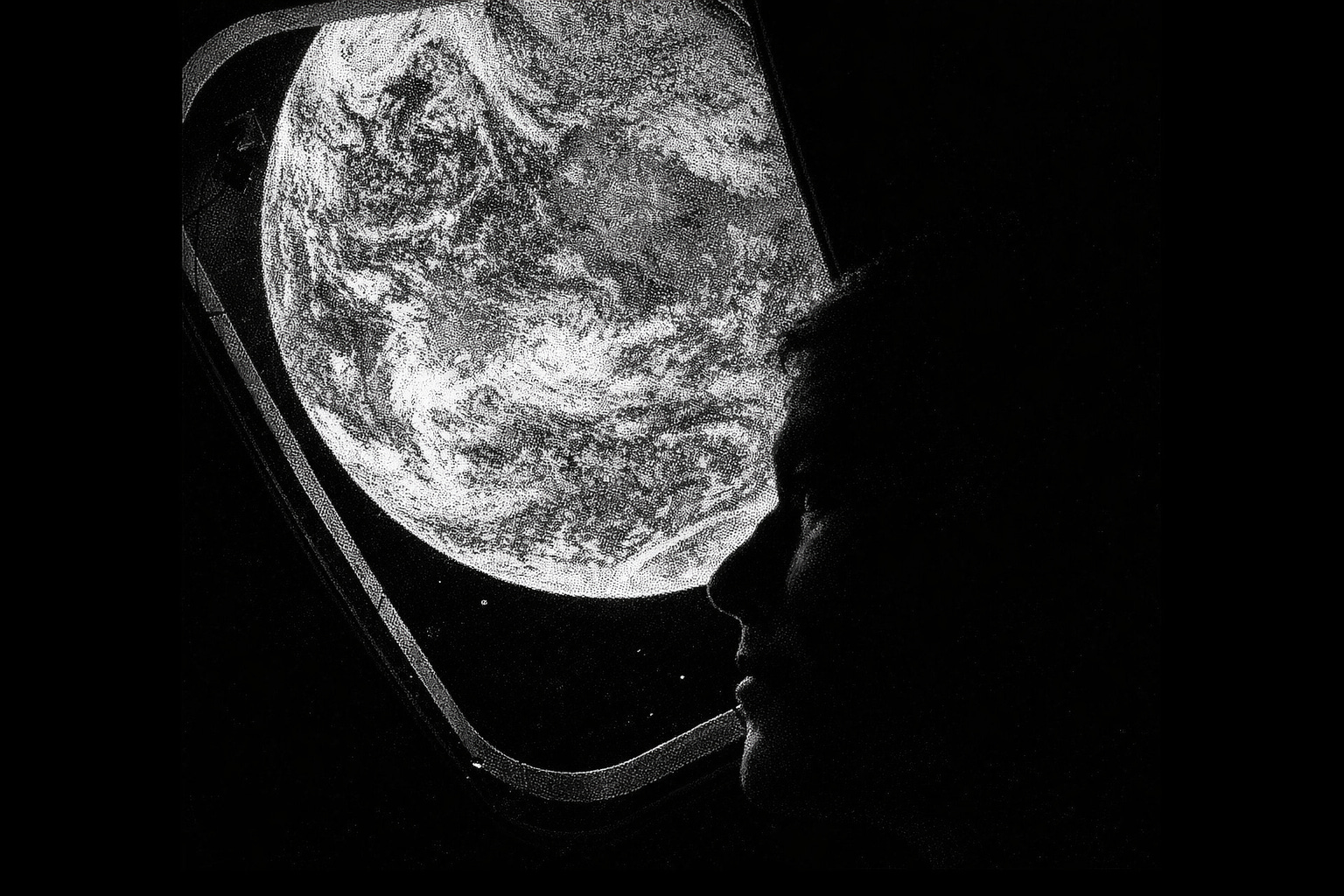
Of my almost 35-year career as a science writer, about 15 years were spent covering space exploration. I wrote about every single Mars mission launched between 1996 and 2011; I was probably the first journalist in my native country, Brazil, to share a NASA photo from Mars online—a shot taken by the pioneering robot Sojourner.
I rejoiced in the many American successes of this golden age, from the rovers Sojourner to Curiosity, and commiserated when daring attempts by Russia, China, Europe, and Japan failed. I had great expectations for the Russian Phobos-Grunt mission, which would have tried to bring to Earth a sample from Phobos, one of Mars’s moons, and I felt deeply when the probe became trapped in Earth’s orbit only a few hours after launch.
I have also always been an enthusiast of crewed space travel. The Right Stuff is one of the greatest movies of all time. I am also a fan of that minor Clint Eastwood effort, Space Cowboys. I collect Flash Gordon comics! When two successive Brazilian governments, those of Presidents Fernando Henrique Cardoso and Luiz Inácio Lula da Silva, both defaulted on their obligations toward the International Space Station and, as a result, Brazil ended up being kicked out of the ISS project, it felt to me like a personal betrayal and a cause for national shame. I will even confess to a vestigial trace of sympathy for Elon Musk because of his space-related activities.
Amid all this enthusiasm, however, there was also a nagging question: why? Why spend the money, the effort, run the risk of sending people out there? It’s not about the science: robots and remote probes can collect all the samples and perform all the measurements we will ever need or desire.
Even if we want large and complex scientific equipment that requires the delicate assembly of several moving parts in situ, like a giant radio telesc ope dish on the far side of the Moon, the same ingenuity w e employ in finding ways to keep people alive, healthy and well-fed in the sterile, radiation-soaked vacuum of space could be redirected to designing robots to do the job.
Natural resources? Yes, a semi–science-fictional case can be made for extracting minerals and rare molecules of economic value from the lunar or Martian underground, and even from asteroid: a mining pit on Mars will arguably cause less biodiversity damage than one in the Amazon rainforest, and if people start calculating the monetary value of environmetal services and damages honestly, the economics of it all might even, someday, add up. But the same answer given in the previous paragraph applies: let robots do it.
In the end, the only goal for which sending humans into space is indispensable is sending humans into space. The endeavor becomes an end in itself. So, again: why?
“Expanding the human experience in the universe” is usually the most common answer, or something very much like it. And this kind of answer faces two skeptical challenges, a practical one and an ideological one.
On the practical side, there are reasons to doubt whether human life will ever be sustainable for long periods outside Earth’s atmosphere. It is reasonable to expect that all we will ever be able to do is “flags and footprints” missions, Apollo-style, or maintain precarious, temporary outposts. And given the limits imposed by things like Special Relativity, it is quite unlikely that there will be outposts anywhere beyond the Solar System — realistically, even sending people anywhere beyond the asteroid belt would be quite a stretch.
The ideological challenge springs from the bad reputation that verbs like “colonize” have acquired, and from what some see as the implicit assumptions behind the impulse to move “out there”—for instance, that Earth is just a shell to be consumed and left behind. Let’s not forget that Trantor, the capital of Isaac Asimov’s Galactic Empire, is described as a planet-wide city, a whole world fully covered in plastic, metal, and concrete: an ecological crime of unmentionable proportions.
The search for clear-headed, rational reasons to put people in space is slippery and, in all probability, will remain so for the foreseeable future. Why not use the money to build better robots that can retrieve all the data we need, or to solve more pressing, Earth-based problems? This kind of prioritization debate will be with us for a long time.
In the end, “expanding the human experience in the universe” is an aesthetic, aspirational imperative—the kind of motivation that lies more behind artistic endeavors and athletic feats than rational policy. Crewed spaceflight is science-based performative poetry: expensive, dangerous, mind-boggling even, but poetry nonetheless. It may become something more in the future, but for now that’s what it is—and each of us has to decide whether we think it’s enough.